The Disadvantages of Ecommerce: Navigating the Challenges of Online Shopping
Introduction
In recent years, ecommerce has revolutionized the way we shop, offering unparalleled convenience and access to a global marketplace. However, along with its benefits, ecommerce brings several disadvantages that can impact consumers and businesses alike. This essay explores these drawbacks, shedding light on the complexities of online shopping.
Lack of Physical Interaction: The Tangibility Dilemma

Lack of Physical Interaction: The Tangibility Dilemma
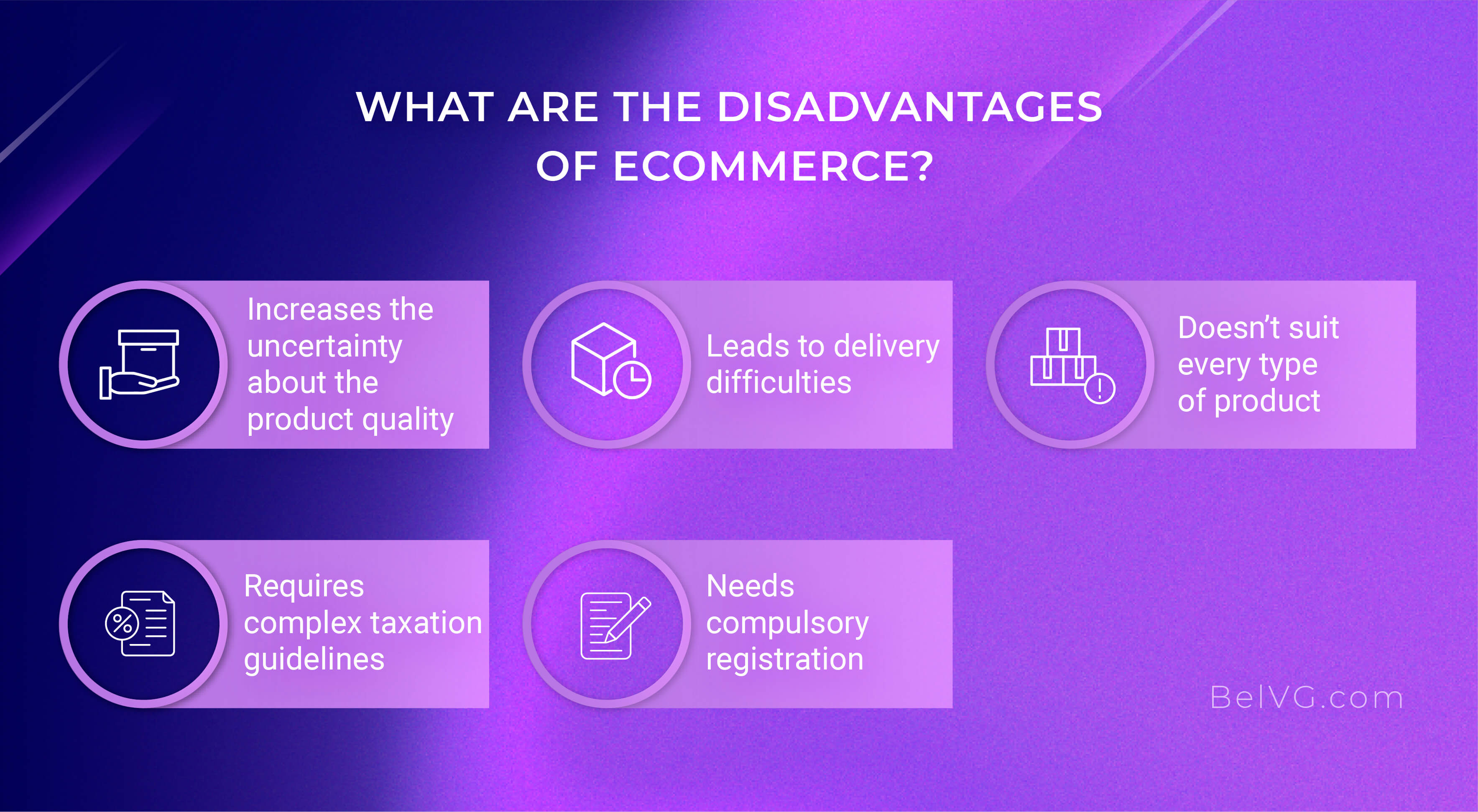
One of the primary disadvantages of ecommerce is the absence of physical interaction with products. Unlike traditional brick-and-mortar stores, where customers can touch, feel, and try out items before purchasing, online shopping relies solely on digital images and descriptions. This lack of tangibility can lead to uncertainty and dissatisfaction among consumers. Studies show that many shoppers hesitate to buy clothing, furniture, or other items online due to concerns about fit, texture, or quality that can only be fully assessed in person.
Delayed Gratification: Waiting for Delivery
 |
Delayed Gratification: Waiting for Delivery |
Another significant downside of ecommerce is the delay in receiving purchased items. Unlike the immediate satisfaction of walking out of a store with a product in hand, online shoppers often face waiting periods ranging from a few days to several weeks for their deliveries. This waiting time can be frustrating, especially for consumers accustomed to instant gratification. Issues with shipping delays or lost packages further exacerbate this drawback, causing inconvenience and disappointment for buyers.
Security Concerns: Safeguarding Personal Information

Security Concerns: Safeguarding Personal Information
Hidden Costs and Fees: The Price Beyond the Price Tag

Hidden Costs and Fees: The Price Beyond the Price Tag
While ecommerce often boasts competitive pricing and discounts, consumers can encounter hidden costs and fees that are not immediately apparent. These can include shipping fees, import duties (for international purchases), return shipping costs, and handling fees. Such additional charges can significantly inflate the total cost of an online purchase, sometimes negating the perceived savings offered by ecommerce platforms. Moreover, navigating through various pricing structures and promotions can be confusing for consumers, leading to dissatisfaction and buyer remorse.
Customer Service Challenges: Bridging the Digital Divide

Customer Service Challenges: Bridging the Digital Divide
Effective customer service is crucial in any retail experience, but it can be challenging to achieve in ecommerce. The lack of face-to-face interaction makes it difficult for consumers to resolve issues or seek assistance promptly. Delayed response times, automated replies, and impersonal communication channels can frustrate customers who encounter problems with their orders, deliveries, or product inquiries. Establishing trust and rapport with online shoppers requires ecommerce businesses to invest in robust customer service strategies that prioritize responsiveness and personalized support.
Limited Examination and Comparison: The Constraints of Online Research
Limited Examination and Comparison: The Constraints of Online Research
Environmental Impact: The Carbon Footprint of Deliveries

The environmental impact of ecommerce is a growing concern. While online shopping reduces the need for physical store space and minimizes some aspects of traditional retail logistics, it introduces new challenges related to packaging and transportation. The proliferation of single-item shipments and expedited delivery options contributes to increased carbon emissions and packaging waste. Ecommerce companies are under pressure to adopt sustainable practices and explore eco-friendly alternatives to mitigate their environmental footprint.